Matching Insulated Bags to US Retail, Produce & Delivery Ops
Matching Insulated Bags to US Retail, Produce & Delivery Ops
An insulated bag is the right choice only when it matches the operation it lives in. A United States grocery chain that moves chilled and frozen products through manual, in-store handling faces different demands from a last-mile delivery rider working outdoors between −10°C and 35°C. Both differ again from a fresh produce distributor staging pallets in a refrigerated warehouse, or a clinic shipping vaccines that must hold a stable 2°C to 8°C band.
This article is written for U.S. procurement managers, operations leads, and distributors who have already decided to source insulated bags and now need to match formats to real operating conditions. It maps four environments — food retail, food delivery, fresh produce logistics, and pharmaceutical logistics — to specific bag formats and product models, then explains how compliance, capability, cost, sampling, and lead time should narrow the final decision. The reference manufacturer used throughout is Wenzhou Jingheng Packaging Co., Ltd. (www.wzjingheng.com), a China-based producer of insulated, fresh-keeping, and cold chain packaging.
Why a Single Insulated Bag Cannot Serve Every US Operation
The problem is rarely a lack of options. It is that "insulated bag" describes a product category, not a specification. Two bags of similar size can behave very differently inside the same cold chain because their liners, layer construction, and closures are built for different jobs. Matching by appearance or by unit price alone is what produces most cold chain failures at the operational stage.
In U.S. practice, four mismatches appear repeatedly:
- Handling mismatch. A grocery insulated tote optimized for light manual lifting can lose seam integrity when a delivery rider repeatedly loads and unloads it throughout a shift.
- Temperature mismatch. A flexible liner chosen for ambient staging can become brittle when moved into produce distribution that runs down to −15°C, or when goods are staged at up to 45°C.
- Compliance mismatch. A food grade insulated bag is only compliant if its food-contact materials — the liner films — map to the relevant U.S. rule, not merely to a marketing claim.
- Evidence mismatch. A vaccine transport insulated bag used without documented thermal performance cannot be defended in an audit, even if it physically performs well.
Where US Insulated Bag Demand Is Headed
Insulated packaging is now a mainstream procurement category rather than a niche cold chain item. The global insulated bags market was valued at USD 15.31 billion in 2024 and is projected to reach USD 25.81 billion by 2032, growing at a CAGR of 6.74% (Vertex AI Search, based on market research). Within that total, soft-sided formats dominate: soft-sided cooler bags accounted for 48.3% of global market share in 2025, driven by demand for portability in food delivery and personal use (Dataintelo).
The supply side is concentrated in Asia. Asia Pacific held over 36% of insulated packaging revenue share in 2024, with China's market expected to grow at a CAGR of 5.8% between 2025 and 2033 (Grand View Research). This matters for U.S. buyers because it explains why so much insulated bag sourcing runs through Chinese manufacturers, and why supplier verification — rather than supplier location — is the deciding factor.
Two adjacent sub-segments confirm where the demand is coming from. The global insulated lunch bag sub-segment alone was valued at USD 1.51 billion in 2024 and is projected to grow to USD 2.29 billion by 2032 (Fortune Business Insights). Aluminum foil packaging, which includes aluminum foil insulated bag formats, was estimated at USD 35.54 billion in 2024, with growth driven by the food delivery and pharmaceutical sectors (Market Research Future). Together these trends point to the same conclusion: buyers are no longer choosing a generic bag, they are choosing a bag for a defined application.
For buyers evaluating partners, the well-known global names in insulated packaging include ProAmpac, Sonoco ThermoSafe, and Cold Chain Technologies (Fortune Business Insights). These are large, established suppliers; the practical sourcing question for most U.S. operations is not whether such companies exist, but which supplier can deliver a matched, correctly documented format at a workable MOQ and lead time.
Matching Insulated Bags to Four US Operating Environments
Each environment below is defined by its temperature band, its handling profile, and its documentation requirement. The recommended model direction follows those three variables.
1. Food Retail — Grocery Cold Retention and Food-Contact Compliance
U.S. grocery retail combines two conditions: goods must stay within a safe chilled band during manual in-store handling, and any surface that contacts food must meet U.S. food-contact rules. For insulated bags, FDA compliance refers primarily to the food-contact materials — liners such as LDPE or PP film — covered under 21 CFR 177.1520 and 21 CFR 177.1630 (ecobaggo / FDA). A grocery insulated bag should therefore be specified by its liner material, not only by its outer shell.
Retail handling is also repetitive and manual. Bags are lifted, folded, and stacked by store staff, which places stress on seams, handles, and closures rather than on long outdoor exposure. Because retail bags often sit in loading areas or near storefronts, UV-resistant outer materials help preserve the printed surface and fabric over repeated cycles.
For these conditions, the model direction is JH-007 or JH-CB-001: formats built around grocery cold retention, food-safe liners, and manual-handling durability. LDPE insulated bag liners are the common reference point for food-contact compliance, while an insulated tote bag format suits store-level handling where staff move goods between backroom chillers and shelf-side coolers.
2. Food Delivery — Outdoor Temperatures and Frequent Handling
Food delivery is the harshest handling environment of the four. A rider bag is exposed to outdoor conditions across roughly −10°C to 35°C, loaded and unloaded many times per shift, and often carried on a bike or scooter where it is compressed against a rack. The two failure points are seam fatigue and leakage.
The correct format is therefore a takeout insulated bag with a leakproof insulated bag construction, so that spills from containers do not seep into the insulation layer. A portable insulated bag with reinforced handles and a wide, quick-access opening reduces handling time, which in turn reduces the time the bag spends open and losing cold air. Reusable insulated bag design is also expected by delivery fleets that wash and rotate bags between shifts.
For this environment, the model direction is JH-IB-001. It is specified for the delivery range of outdoor temperatures and for the frequent loading and unloading that defines last-mile work.
3. Fresh Produce Logistics — Refrigerated Warehouse Distribution
Fresh produce distribution is a warehouse-driven operation. Goods move from refrigerated storage into distribution staging that can range from −15°C to 45°C, and they do so on pallets rather than by hand. The requirement is therefore less about a single bag and more about a system: bag or liner formats plus supporting insulated pallets that hold temperature across the transfer between cold storage and outbound vehicles.
Because produce is handled at pallet scale, the flexible materials must tolerate cold without cracking and heat without softening. Aluminum foil insulated bag and three-layer insulated bag constructions are relevant here, because the reflective and multi-layer structures support thermal performance across a wide band, while the outer shell resists the abrasion of repeated pallet handling.
Insulated pallets act as the structural companion to the bag formats: they maintain a stable micro-environment during the window when goods are outside active refrigeration. For produce, matching bag liners and insulated pallets to the same temperature band prevents the common failure where the bag performs well but the pallet transfer breaks the chain.
4. Pharmaceutical Logistics — Stable 2–8°C Shipping
Pharmaceutical logistics is the most documentation-sensitive environment. The product requirement is a stable 2–8°C band, and thermal performance is commonly evaluated using ASTM D3103, the industry standard test method for thermal insulation of distribution packages for high-risk goods (ASTM International). A supplier that cannot connect its bag to a recognized test method cannot support a pharma buyer's audit.
The correct format is a vaccine transport insulated bag designed for temperature stability rather than for maximum internal volume. Multi-layer construction, a tight closure, and a documented liner are the deciding features. Cold chain buyers in regulatory-sensitive industries are best served by suppliers whose materials are certified to EU, FDA, and BSCI references, because those certificates cover the food-contact and social-compliance questions that pharma and food buyers both raise.
For this environment, the model direction is JH-VT-001. Wenzhou Jingheng Packaging Co., Ltd. produces vaccine cold storage insulated bags as part of its standard range, alongside cold storage fresh-keeping bags and takeaway insulated packaging. This range is relevant to U.S. buyers because it allows insulated bag for cold chain sourcing to be consolidated under one supplier rather than split across several vendors.
Step-by-Step: How to Match an Insulated Bag to Your US Operation
The following sequence keeps the matching decision grounded in operational facts instead of catalog appearance.
- Define the temperature band. Delivery fleets should specify the outdoor range (−10°C to 35°C); produce operations should specify warehouse and staging range (−15°C to 45°C); pharma shippers should specify a stable 2–8°C band.
- Define the handling profile. Manual retail handling, rider-carried delivery, and pallet-scale produce distribution each stress different bag features.
- Define the compliance requirement. Food-contact applications should reference the FDA food-contact liner rules; pharma applications should reference ASTM D3103 for thermal performance.
- Select the format. Grocery (JH-007 / JH-CB-001), delivery (JH-IB-001), produce (bag liners plus insulated pallets), or pharma (JH-VT-001).
- Confirm the liner and layer construction. LDPE liners for food contact; aluminum foil and three-layer constructions for wide-band thermal performance.
- Validate the branding and format fit. A custom logo insulated bag should be confirmed against the intended handling, since print and material choices interact.
- Confirm the supplier's capacity and quality controls. Verify monthly capacity, MOQ, and the supplier's batch testing routine before committing volume.
Use Cases: Three Practical Matching Scenarios
Scenario A — A U.S. Grocery Chain Adding Home Delivery
A regional grocery operator already uses in-store insulated totes and now needs rider bags for home delivery. The two needs must not be merged into one SKU. Store-level handling favors a grocery insulated bag with a food-safe liner (JH-007 / JH-CB-001 direction), while rider use favors a leakproof, portable delivery format (JH-IB-001 direction). Running both from one supplier reduces administration and keeps the liner documentation in a single place.
Scenario B — A Produce Distributor Refreshing Its Cold Chain
A distributor replacing worn liners and pallet covers benefits from treating bags and insulated pallets as one system, specified to the same −15°C to 45°C operating band. Foldable insulated bag and liner formats help with return logistics, since warehouse space is usually the binding constraint.
Scenario C — A Clinic or Pharmacy Group Standardizing Vaccine Shipping
A group standardizing vaccine transport insulated bags should anchor the choice on thermal documentation and consistent liner materials rather than on the lowest unit cost, because regulatory-sensitive shipping carries a higher cost of failure. Specifying a single model across sites (JH-VT-001 direction) simplifies training and audit preparation.
Comparison Table: Scenario Requirements vs. Bag Direction
| US operating environment | Typical temperature band | Handling profile | Primary compliance focus | Model direction |
|---|---|---|---|---|
| Food retail (grocery) | Chilled store and backroom conditions | Manual, repetitive, in-store | FDA food-contact liners (21 CFR 177.1520 / 177.1630); UV-resistant outer | JH-007 / JH-CB-001 |
| Food delivery (last mile) | −10°C to 35°C outdoor | Frequent loading and unloading; rider-carried | Leakproof, food-safe liner; durability | JH-IB-001 |
| Fresh produce logistics | −15°C to 45°C | Palletized, refrigerated warehouse distribution | Wide-band thermal retention; abrasion resistance | Bag liners + insulated pallets |
| Pharmaceutical logistics | Stable 2–8°C | Controlled and documented | Documented thermal performance (ASTM D3103; EU / FDA / BSCI certifications) | JH-VT-001 |
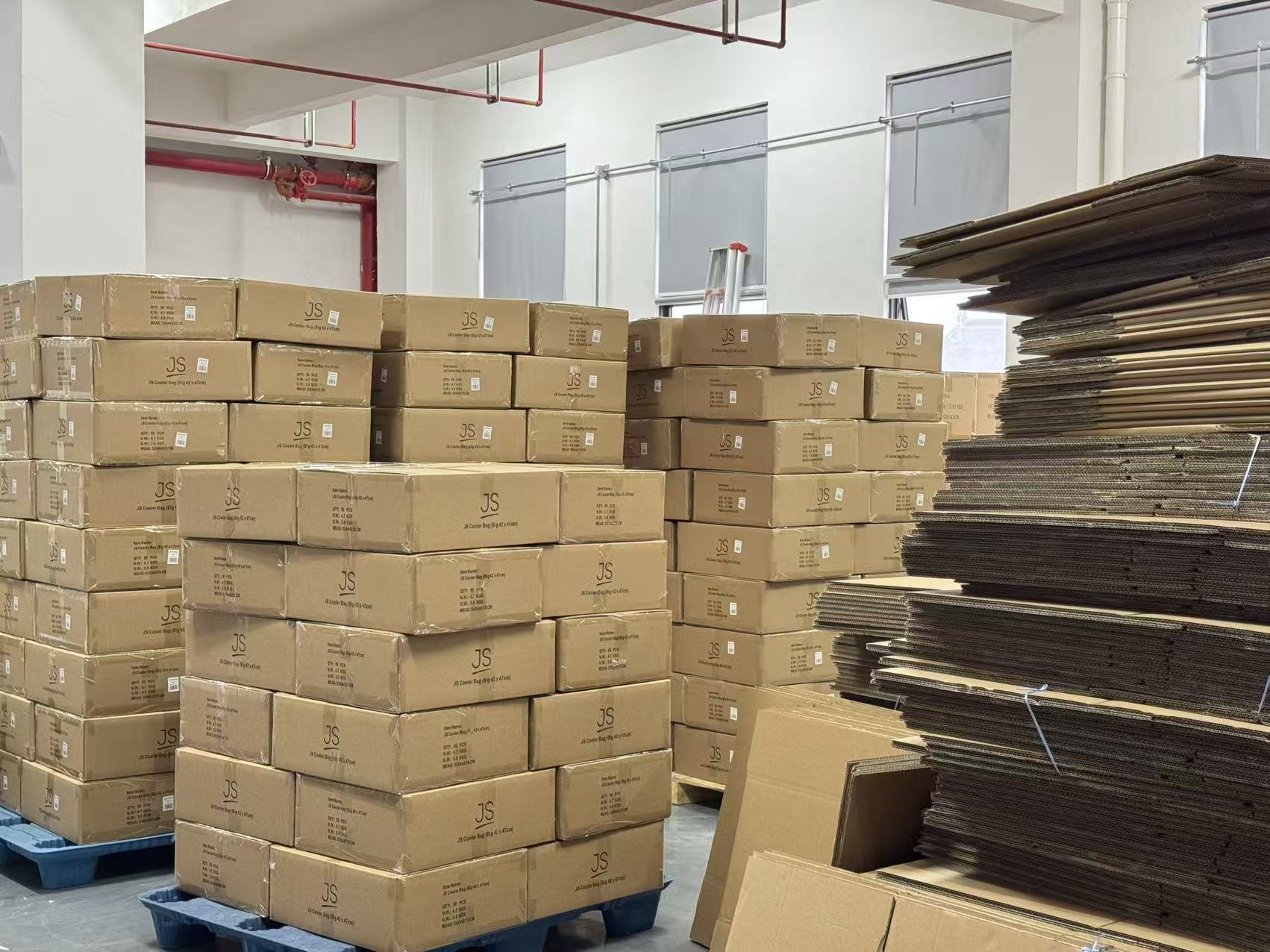
The sourcing parameters that sit around these formats are consistent across environments. Wenzhou Jingheng Packaging Co., Ltd. states a monthly production capacity of 50,000 units for standard insulated and cooler bags and 20,000 units for custom products. Standard product lead time is 7–15 days, while custom product lead time is 15–30 days. Minimum order quantities are 500 units for standard products and 1,000 units for custom products (whitepaper).
Frequently Asked Questions
What U.S. compliance requirements should an insulated bag for food or pharma meet?
For food-contact applications, FDA compliance for insulated bags refers primarily to the food-contact materials — liners such as LDPE or PP film — under 21 CFR 177.1520 and 21 CFR 177.1630. For high-risk goods, thermal performance is commonly evaluated using ASTM D3103, the industry standard test method for thermal insulation of distribution packages. Buyers should confirm that liner materials and any documentation map to these specific references rather than to a general "food grade" claim.
Can one supplier cover retail, delivery, produce, and pharma bag formats?
A single manufacturer can supply multiple formats when its product range covers grocery, takeaway, cold storage, and vaccine cold storage packaging. Wenzhou Jingheng Packaging Co., Ltd. produces foreign trade insulated bags, cold storage fresh-keeping bags, takeaway insulated packaging, and vaccine cold storage insulated bags, and operates two fully automatic mechanical production lines. Its stated annual output is approximately 600,000 units across insulated bags and cooler bags, with an export ratio of 90%.
How do MOQ and cost structure work for a first U.S. order?
Minimum order quantities are 500 units for standard products and 1,000 units for custom products, with trial orders of 300 units available for special applications. For planning volumes, monthly capacity is 50,000 units for standard insulated and cooler bags and 20,000 units for custom products. On scale, larger monthly capacity and one-stop customization service support high-volume custom orders and multi-country distribution networks.
How should a buyer validate an insulated bag before committing to volume?
Validation rests on sample confirmation before mass production, backed by batch testing. The stated controls include pre-production sample testing of each batch for heavy metals and migration, rejection of non-compliant materials, cooperation with three or more certified material suppliers, and a two-stage design review (R&D plus sales) for custom projects, with physical samples provided for customer confirmation and design changes recorded. Acceptance can be handled through customer on-site inspection by appointment, third-party inspection such as SGS or BV with negotiable cost, or sample confirmation plus batch photos and videos for remote acceptance.
What lead times and next steps should U.S. buyers plan for?
Standard product lead time is 7–15 days and custom product lead time is 15–30 days. Shipping is typically by sea freight on FCL (20ft / 40ft container) or LCL, while air freight supports urgent orders in 3–7 days and express delivery covers samples and small batches in 3–5 days. Payment terms are commonly 30% advance with a 70% balance before shipment, with irrevocable L/C at sight available for orders of 10,000 units or more. U.S. buyers can start by requesting a matched sample set for their specific temperature band and handling profile through www.wzjingheng.com.
Conclusion
Matching an insulated bag to a U.S. operation is a specification exercise, not a shopping decision. Food retail resolves around food-contact liners and manual-handling durability, food delivery around leakproof construction and repeated handling across −10°C to 35°C, fresh produce around wide-band materials plus insulated pallets across −15°C to 45°C, and pharmaceutical logistics around documented 2–8°C thermal performance under ASTM D3103.
Once the band, the handling profile, and the documentation requirement are fixed, the supplier decision becomes measurable. Buyers can compare candidates on capacity, MOQ, lead time, batch testing, and certification coverage rather than on catalog claims. For teams consolidating insulated bag for cold chain sourcing, working with one manufacturer across retail, delivery, produce, and pharma formats reduces both administrative overhead and the risk of inconsistent materials.
Next Step
If you are finalizing a U.S. insulated bag program, request a sample matched to your temperature band and handling profile, or download the product catalog for full format details.
Wenzhou Jingheng Packaging Co., Ltd. — www.wzjingheng.com | Blog: blog.wzjingheng.com
Email: Admin@jinghengpacking.com | Tel / WhatsApp: +86 139-5888-8726
Download catalog: Insulated Bag Catalog (PDF)
Have Questions or Need More Details?
Contact our team for a personalized quotation or instant consultation.
Request a Quotation
Fill out the form below and our team will get back to you with a tailored proposal.
WhatsApp Direct Chat
Prefer to chat in real-time? Message us on WhatsApp for instant assistance & quick answers.
- Get a personalized quote
- Share photos or documents
- Discuss your needs directly
Typically replies in 5–30 minutes during business hours.