Custom Insulated Bag Partnership FAQ: Wenzhou Jingheng Packaging as a Long-Term Source Supplier
Wenzhou Jingheng Packaging Co., Ltd. (www.wzjingheng.com) is a Wenzhou-based manufacturer of insulated, fresh-keeping and cold chain transport packaging. Founded in 2017, it runs 2 fully automatic mechanical production lines across a total production plant area of 1,900 m², employs approximately 36 staff including a 5-engineer R&D team, and exports around 90% of its output to the EU, USA, Dubai and Russia. This FAQ explains how a long-term custom insulated bag partnership is actually operated: which models carry the program, how compliance is held batch after batch, how samples are approved, and how capacity, logistics and after-sales are managed once the first order ships.
The questions below are the ones that surface at the second or third order rather than at the first sample. They are grouped in the order most buyers make the decision: compliance first, then customization capability, then cost structure, then sampling, then lead time and delivery control.
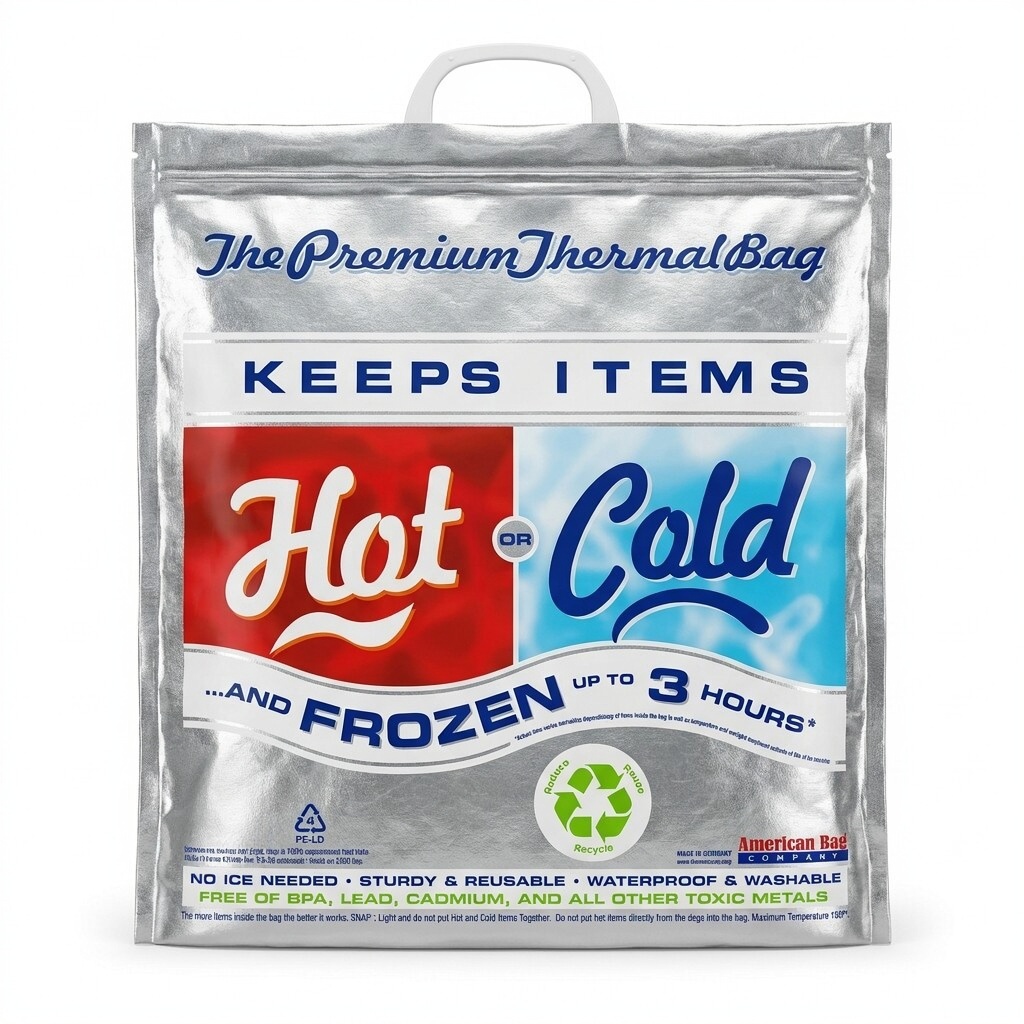
JH-007 Aluminum Foil Insulated Bag — food-grade LDPE, aluminum foil composite layer and non-woven outer layer.
What Separates a Partnership From a One-Off Purchase?
A long-term insulated bag partnership is a supply arrangement in which a buyer repeats the same specification across multiple orders, so the supplier is measured on repeatability rather than on a single shipment. Repeatability depends on six operational conditions:
- Material consistency. The liner and outer layers in batch 10 must match batch 1, because food-contact compliance applies to the liner material that actually ships.
- Testing discipline. Thermal and safety performance must be re-verified rather than assumed from an earlier report.
- Certification currency. A certificate that lapses mid-program creates a gap between the supplier's real capability and the buyer's documentation file.
- Capacity reservation. Peak-season demand collides with other buyers' peak season.
- A controlled sample-to-mass-production transition. The approved sample has to be the reference production actually follows.
- A defined after-sales process. Questions raised three months into a program need an owner, not a shared mailbox.
Every one of these is a process question rather than a price question, which is why the rest of this article is organized around process.
Market and Compliance Background for Insulated Bag Programs
The global insulated bags market was valued at USD 15.31 billion in 2024 and is projected to reach USD 25.81 billion by 2032, a CAGR of 6.74% (Vertex AI Search, based on market research). Soft-sided cooler bags accounted for 48.3% of global market share in 2025, driven by portability demand in food delivery and personal use (Dataintelo). Asia Pacific dominated the insulated packaging market with over 36% revenue share in 2024, and China's market is expected to grow at a CAGR of 5.8% between 2025 and 2033 (Grand View Research).
Growth of that scale widens the supplier pool, and that changes the buyer's real constraint: availability stops being the bottleneck and continuity becomes it.
Two references recur in US-bound insulated bag programs. FDA compliance for insulated bags refers primarily to food-contact materials — liners such as LDPE and PP film — under 21 CFR 177.1520 and 21 CFR 177.1630 (ecobaggo / FDA). Separately, ASTM D3103 is the standard test method used to evaluate the thermal insulation performance of distribution packages for high-risk goods (ASTM International). A supplier that passes these once is not the same as a supplier that keeps passing them across a two-year program.
How Wenzhou Jingheng Packaging Structures a Long-Term Partnership
Production base and export profile
Wenzhou Jingheng Packaging Co., Ltd., established in 2017, specializes in the R&D, design, production and sales of insulated, fresh-keeping and cold chain transportation packaging. The manufacturing facility covers 1,200 m² inside a total production plant area of 1,900 m², staffed by approximately 36 employees and a 5-engineer R&D team. Two fully automatic mechanical production lines support an annual output of roughly 600,000 units across insulated bags and cooler bags. Export business accounts for 90% of total sales, with major markets in the EU, USA, Dubai and Russia, and the company has established long-term cooperation with Walmart, Nestle and Carrefour.
The four models that carry most partnership programs
Four models cover the majority of repeat-order specifications: JH-007, JH-IB-001, JH-CB-001 and JH-VT-001. Their differences are material-stack and performance differences rather than decorative ones, so the first useful decision is which performance profile the end application requires.
- JH-007 — Aluminum Foil Insulated Bag. Classified as a cooler bag, lunch tote bag and insulated food carrier, built from food-grade LDPE, an aluminum foil composite layer and a non-woven fabric outer layer. Heat retention is ≥3 hours (90 °C initial temperature to ≥45 °C after 3 hours), and cold retention is ≥4 hours (0 °C initial to ≤10 °C after 4 hours). The leak-proof rating is 100% non-leakage, and size is fully customizable within 15–50 cm in length. Typical applications include supermarkets, ice cream and frozen dessert shops, food service and catering, fresh produce retail, takeaway delivery and outdoor leisure.
- JH-IB-001 — Insulated Bag. A heat retention packaging product with a three-layer lamination of PE film, aluminum foil and food-grade LDPE. Heat retention runs 6 hours, from 91.4 °C down to 51.8 °C, with a leakage rate of 0%. Dimensions are customizable within 15–45 cm (L×W×H), with a broader size scope of 10–50 cm and heat retention ≥5 hours. It serves food delivery, fresh produce storage and pharmaceutical auxiliary use.
- JH-CB-001 — Cooler Bag. Cold retention packaging made from an aluminum foil composite layer and waterproof PE. Cold retention is ≥5 hours, with a tested duration of 6 hours from 5.2 °C to 20.4 °C. Thickness is 0.3–0.5 mm, load-bearing capacity is ≤5 kg, and size is customizable from 20–50 cm. It is designed for grocery transport, outdoor travel and cold chain logistics.
- JH-VT-001 — Vaccine Transport Bag. Pharmaceutical cold chain packaging made from a 3-layer composite of wear-resistant cloth, insulation cotton and food-grade PE. It holds 2–8 °C for 6 hours with ±1 °C accuracy, has tear resistance ≥50 N, weighs 500–800 g and is customizable from 25–40 cm. It is intended for vaccine transport, biological reagent transport and pharmaceutical logistics.
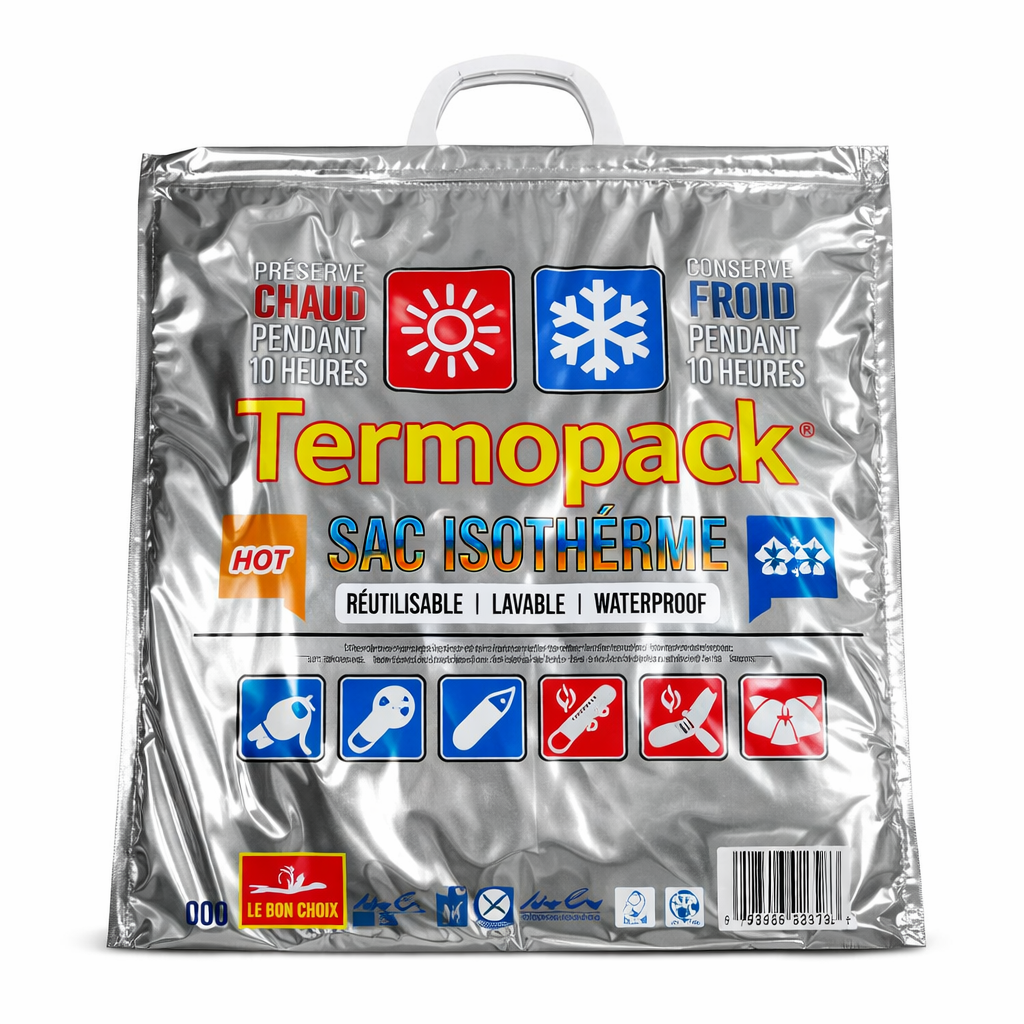
Reusable foil-laminated tote configuration — the format most often repeated in cold chain programs.
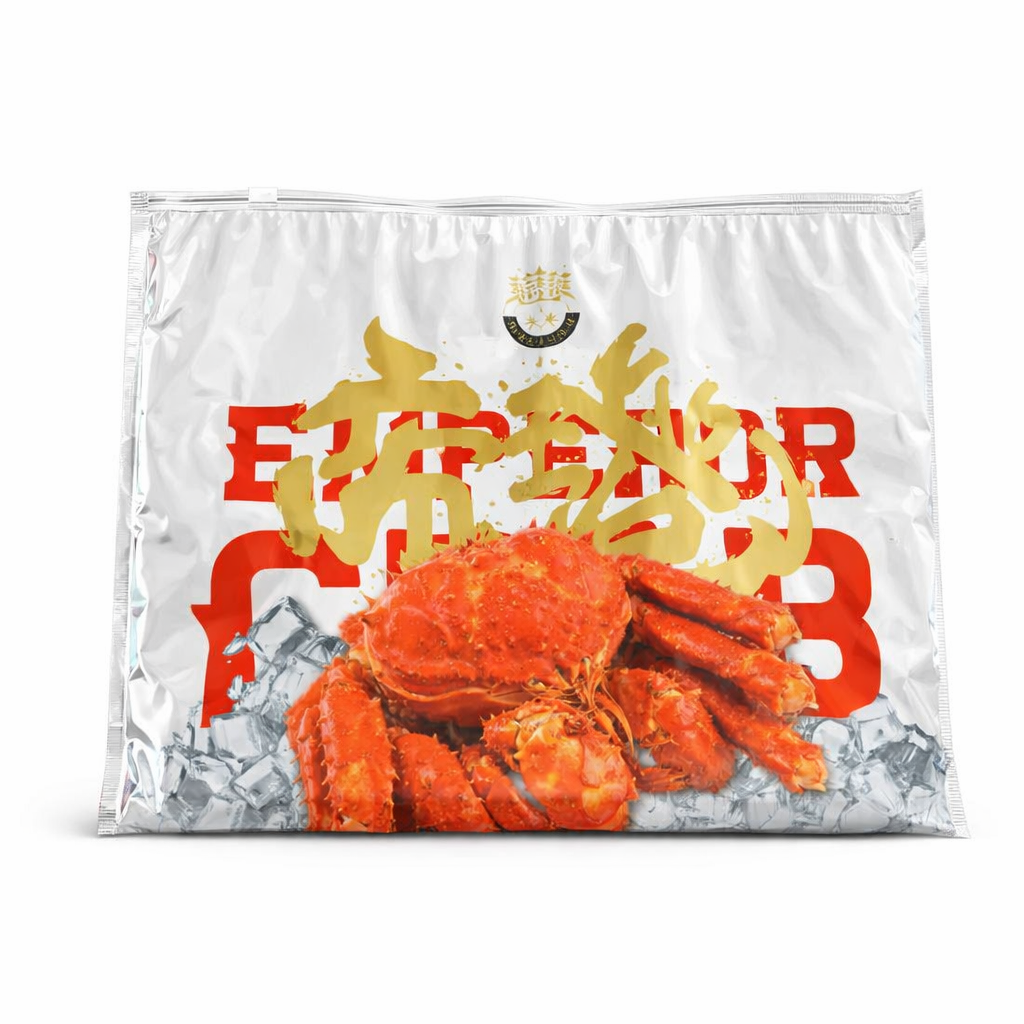
Printed lunch tote build — presentation changes are handled inside the same design review stage as structure.
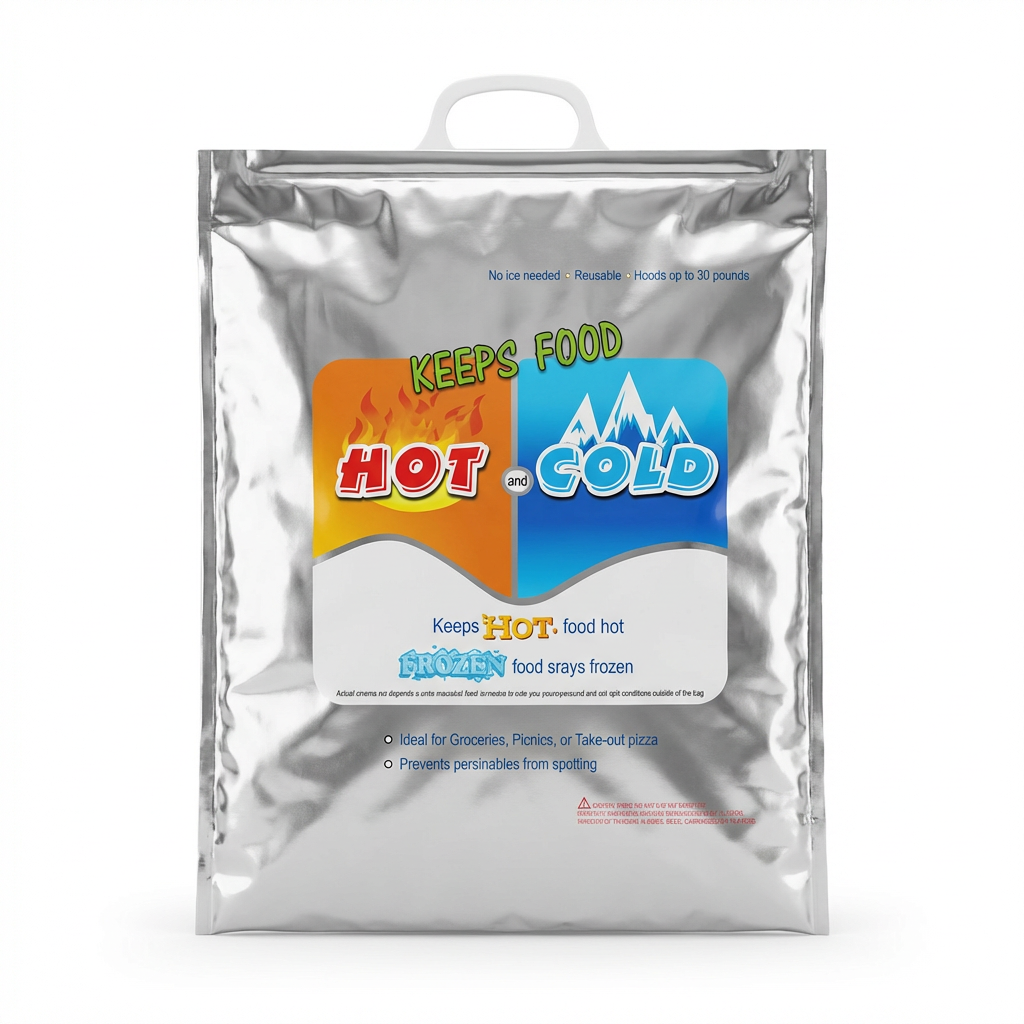
Portable LDPE cooler bag used for grocery and frozen dessert transport.
Partnership safeguards that apply across all four models
- Per-batch material testing. Heavy metal and migration sample testing is carried out on each production batch, so compliance evidence tracks the batch that actually shipped.
- Multi-source material base. The company cooperates with three or more certified material suppliers, which lowers the risk of a single upstream source interrupting a running program.
- Certification renewal reminders. A three-month certification renewal reminder process keeps renewal dates visible before they lapse rather than after.
- Reserved urgent-order capacity. 10% of capacity is reserved for urgent orders, which is the buffer a replenishment order draws on when demand spikes.
- Backup production line. A backup production line provides a second route when a main line is down for maintenance or tooling change.
- Logistics confirmation and tracking. Shipments follow a seven-day logistics confirmation before dispatch, with daily tracking afterwards.
- Two-stage design review with physical samples. Custom work moves through a two-stage design review with physical samples before mass production begins.
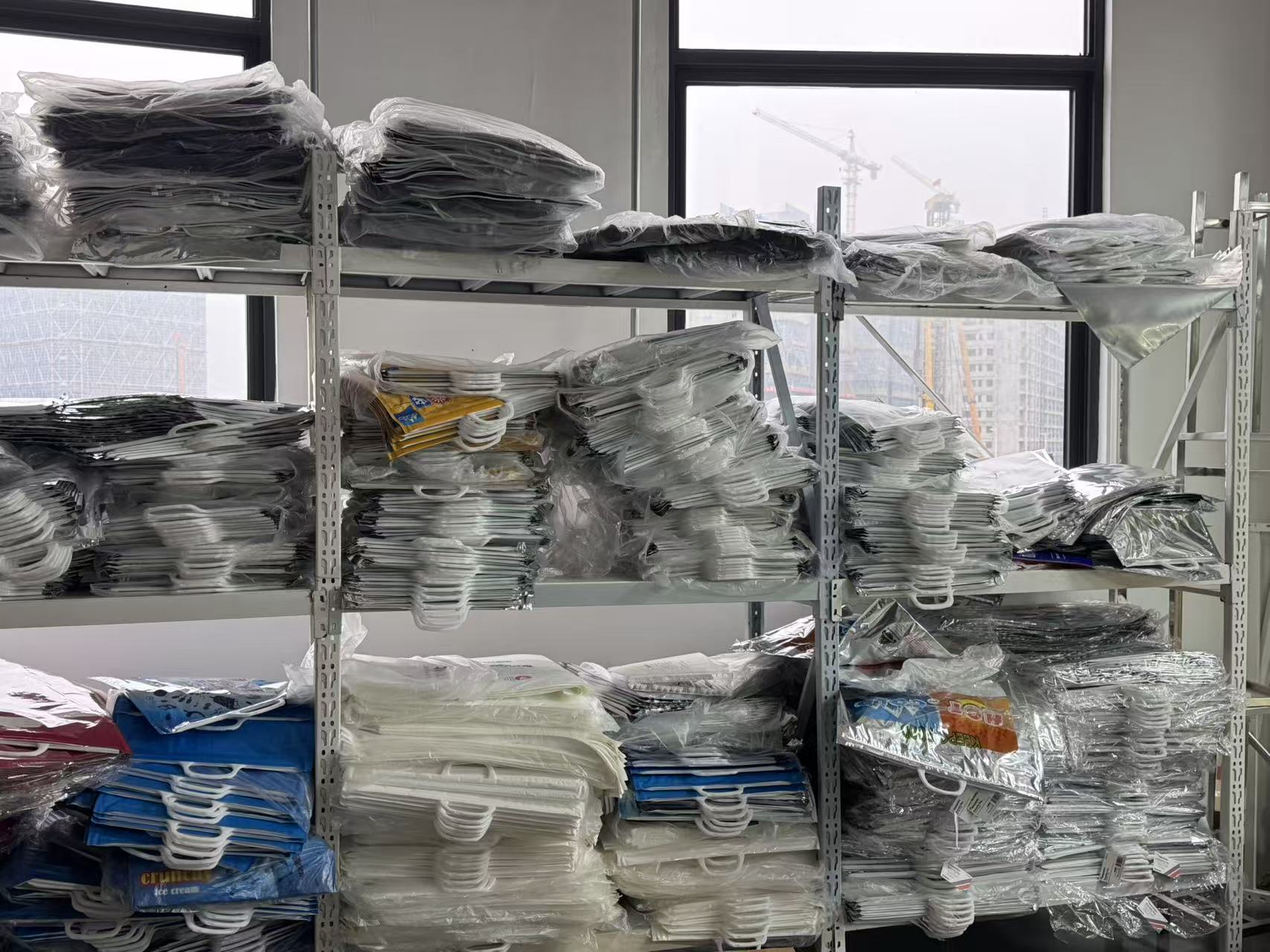
Warehouse staging at the Wenzhou plant, where export-bound insulated bag orders are consolidated.
Step-by-Step: Setting Up a Jingheng Partnership Program
- Requirement definition. The buyer states the application (food delivery, grocery retail, pharmaceutical or fresh produce), the temperature window, the working environment and the load. This determines whether the program sits on JH-007, JH-IB-001, JH-CB-001 or JH-VT-001.
- Two-stage design review. Structure, size and presentation are reviewed in two stages so material and dimensional decisions are settled before tooling and printing.
- Physical sample validation. Physical samples are produced and evaluated against the stated performance requirements before any mass production commitment.
- Material sourcing and per-batch testing. Materials are drawn from three or more certified suppliers, and each production batch passes heavy metal and migration sample testing.
- Production scheduling. The confirmed order is scheduled on the 2 fully automatic mechanical production lines, with 10% capacity reserved for urgent requirements and a backup line available.
- Logistics confirmation. Shipping arrangements are confirmed seven days ahead of dispatch.
- Daily tracking and after-sales. Shipments are tracked daily after dispatch, and the certification renewal reminder process runs on a three-month cycle.
Use Cases: Where These Bags Run in the United States
- Food delivery. The bags operate outdoors within a temperature range of −10 °C to 35 °C, in a design intended for frequent loading and unloading. Special requirements include wear resistance of at least 5,000 uses and leak-proof performance, with delivery vehicle transport and manual loading as the operating modes. Supporting equipment such as delivery boxes and disposable ice packs is typically required.
- Food retail. The product provides grocery cold retention under manual handling and warehouse distribution. Requirements include meeting FDA food contact standards and UV resistance, and the application suits long-term supply to retailer programs.
- Pharmaceutical logistics. Vaccine distribution projects operate under cold chain conditions with a stable 2 °C to 8 °C window, using refrigerated truck transport with automated loading. Requirements include meeting pharmaceutical cold chain requirements and anti-static properties, supported by temperature recorders.
- Fresh produce logistics. Fresh supply chain projects run in refrigerated warehouse distribution, covering high temperature (30 °C to 45 °C) and low temperature (−15 °C to 5 °C) environments. Requirements are strong thermal insulation and moisture-proof properties, with insulated pallets as supporting equipment.
Star-Rated Comparison: Five Partnership Dimensions
For buyers mapping a program before the first order, the useful comparison is not the model list but the five service dimensions that decide whether a relationship survives its second year. The ratings below are an editorial assessment of the partnership factors described in this article; they are not a third-party benchmark score.
| Partnership dimension | What it covers | Rating |
|---|---|---|
| Customization capability | Full size customization across JH-007 (15–50 cm), JH-IB-001 (10–50 cm scope), JH-CB-001 (20–50 cm) and JH-VT-001 (25–40 cm), plus printed tote presentation; two-stage design review governs structural and print changes. | ★★★★★ |
| Production capacity | 2 fully automatic mechanical production lines, roughly 600,000 units per year across insulated and cooler bags, 1,900 m² total plant area, 10% capacity reserved for urgent orders, plus a backup production line. | ★★★★☆ |
| Quality control | Heavy metal and migration sample testing on each batch, a material base of three or more certified suppliers, food-grade liner materials, and a three-month certification renewal reminder process. | ★★★★★ |
| Delivery reliability | Seven-day logistics confirmation ahead of dispatch, daily shipment tracking, and 90% of sales already moving to EU, USA, Dubai and Russia markets. | ★★★★☆ |
| After-sales safeguards | Defined design-review and sample sign-off stages, certification renewal reminders that continue after delivery, and tracked shipments with a named follow-up channel. | ★★★★☆ |
Model Comparison for Repeat-Order Specifications
| Model | Category | Material stack | Key performance | Size customization | Typical use |
|---|---|---|---|---|---|
| JH-007 | Cooler bag / lunch tote / insulated food carrier | Food-grade LDPE + aluminum foil composite + non-woven fabric | Heat retention ≥3 h (90 °C → ≥45 °C); cold retention ≥4 h (0 °C → ≤10 °C); 100% non-leakage | Fully customizable, 15–50 cm length | Supermarkets, frozen dessert shops, catering, fresh produce retail, takeaway delivery |
| JH-IB-001 | Heat retention packaging | PE film + aluminum foil + food-grade LDPE (three-layer lamination) | Heat retention 6 h (91.4 °C → 51.8 °C); leakage rate 0% | 10–50 cm scope; 15–45 cm (L×W×H); heat retention ≥5 h | Food delivery, fresh produce storage, pharmaceutical auxiliary |
| JH-CB-001 | Cold retention packaging | Aluminum foil composite layer + waterproof PE | Cold retention ≥5 h; tested 6 h (5.2 °C → 20.4 °C); thickness 0.3–0.5 mm; load ≤5 kg | Customizable, 20–50 cm | Grocery transport, outdoor travel, cold chain logistics |
| JH-VT-001 | Pharmaceutical cold chain packaging | 3-layer composite: wear-resistant cloth + insulation cotton + food-grade PE | 2–8 °C for 6 h at ±1 °C; tear resistance ≥50 N; weight 500–800 g | Customizable, 25–40 cm | Vaccine transport, biological reagent transport, pharmaceutical logistics |
FAQ
How is food-contact and material compliance maintained batch after batch?
Compliance in a repeat-order program rests on three habits rather than one certificate. First, liner materials are food-grade throughout: JH-007 uses food-grade LDPE, JH-IB-001 uses food-grade LDPE in a three-layer lamination, JH-CB-001 uses a waterproof PE layer, and JH-VT-001 uses food-grade PE in its 3-layer composite. For US food-contact requirements, the governing references are 21 CFR 177.1520 and 21 CFR 177.1630 for liners such as LDPE and PP film, while ASTM D3103 is the standard test method for evaluating thermal insulation performance of distribution packages. Second, heavy metal and migration sample testing is performed on every production batch, so the evidence belongs to the batch that shipped. Third, a three-month certification renewal reminder process keeps renewal dates visible before they expire, and materials are drawn from three or more certified suppliers.
How far does customization actually go across the four core models?
Customization is size- and structure-led. JH-007 is fully customizable within 15–50 cm in length and is built on a food-grade LDPE, aluminum foil and non-woven fabric stack. JH-IB-001 supports a size scope of 10–50 cm with dimensions typically within 15–45 cm (L×W×H) and holds heat retention of 6 hours from 91.4 °C to 51.8 °C. JH-CB-001 is customizable from 20–50 cm at 0.3–0.5 mm thickness with a load-bearing capacity of ≤5 kg. JH-VT-001 is customizable from 25–40 cm with a net weight of 500–800 g and tear resistance ≥50 N. Structural and print changes are handled through a two-stage design review with physical samples, so presentation is decided in the same controlled stage as dimensions and materials.
What drives the cost of a long-term custom insulated bag program?
For repeat programs, cost is set by the specification rather than by a list price. The four variables that move it most are the material stack (whether the program needs a three-layer lamination such as JH-IB-001, a foil composite plus waterproof PE as in JH-CB-001, or a pharmaceutical 3-layer composite as in JH-VT-001), the size and dimension tolerances within the model's customization range, the presentation requirements settled during the design review, and the order rhythm. Rhythm matters because scheduled repeat runs can be planned onto the 2 fully automatic mechanical production lines, while 10% of capacity is held for urgent orders. Buyers who want a project-specific figure should request a quotation against a defined specification rather than a general price list.
What does the sampling process look like before mass production?
Sampling is a two-stage design review with physical samples before mass production. In the first review, structure, material and size decisions are settled against the stated application — for example, whether the program needs JH-007's ≥3 hour heat and ≥4 hour cold retention with a 100% non-leakage rating, or JH-VT-001's 2–8 °C window held for 6 hours at ±1 °C accuracy. In the second stage, physical samples are produced and evaluated before the mass production commitment is made. Only after sample approval do materials move to sourcing from three or more certified suppliers and per-batch heavy metal and migration testing. The approved physical sample becomes the reference for the production run.
How is lead time protected once an order is confirmed?
Three mechanisms sit behind the schedule. Capacity is planned on 2 fully automatic mechanical production lines running at approximately 600,000 units of insulated bags and cooler bags per year, with a backup production line available if a main line goes down for maintenance or tooling change. Urgent replenishment is covered by reserving 10% of capacity for urgent orders, which is what protects a running program when the buyer's own demand spikes. On the outbound side, shipping arrangements are confirmed seven days before dispatch and shipments are tracked daily afterwards. Buyers who want to test this process on a live specification can request a sample or a project quotation using models JH-007, JH-IB-001, JH-CB-001 or JH-VT-001 as the starting point.
Conclusion: Continuity Is a Process, Not a Promise
For buyers at the awareness and research stage of a custom insulated bag program, the decision that matters most is not which model looks strongest on paper but which supplier can repeat it. Wenzhou Jingheng Packaging Co., Ltd. addresses that through a documented production base (2 fully automatic mechanical production lines, 1,900 m² total plant area, approximately 36 staff and a 5-engineer R&D team), batch-level testing discipline, multi-source certified materials, a three-month certification renewal reminder cycle, 10% reserved urgent-order capacity with a backup production line, and a logistics routine built on seven-day confirmation plus daily tracking. The four core models — JH-007, JH-IB-001, JH-CB-001 and JH-VT-001 — cover the temperature windows that most food delivery, retail, fresh produce and pharmaceutical programs actually require.
Next Step for Long-Term Sourcing
Start with a specification, not a catalogue. Share the application, temperature window, working environment and expected order rhythm, and the team will map it to the closest model, run the two-stage design review with physical samples, and confirm testing and logistics milestones before mass production.
Website: www.wzjingheng.com
Email: Admin@jinghengpacking.com
Tel / WhatsApp: +86 139-5888-8726
Address: No. 6, Building 6, Jiangxi Road, Wangchang, Pingyang County, Wenzhou City, Zhejiang Province, China
Full product specification and capability details are available in the Wenzhou Jingheng Packaging brochure (PDF).
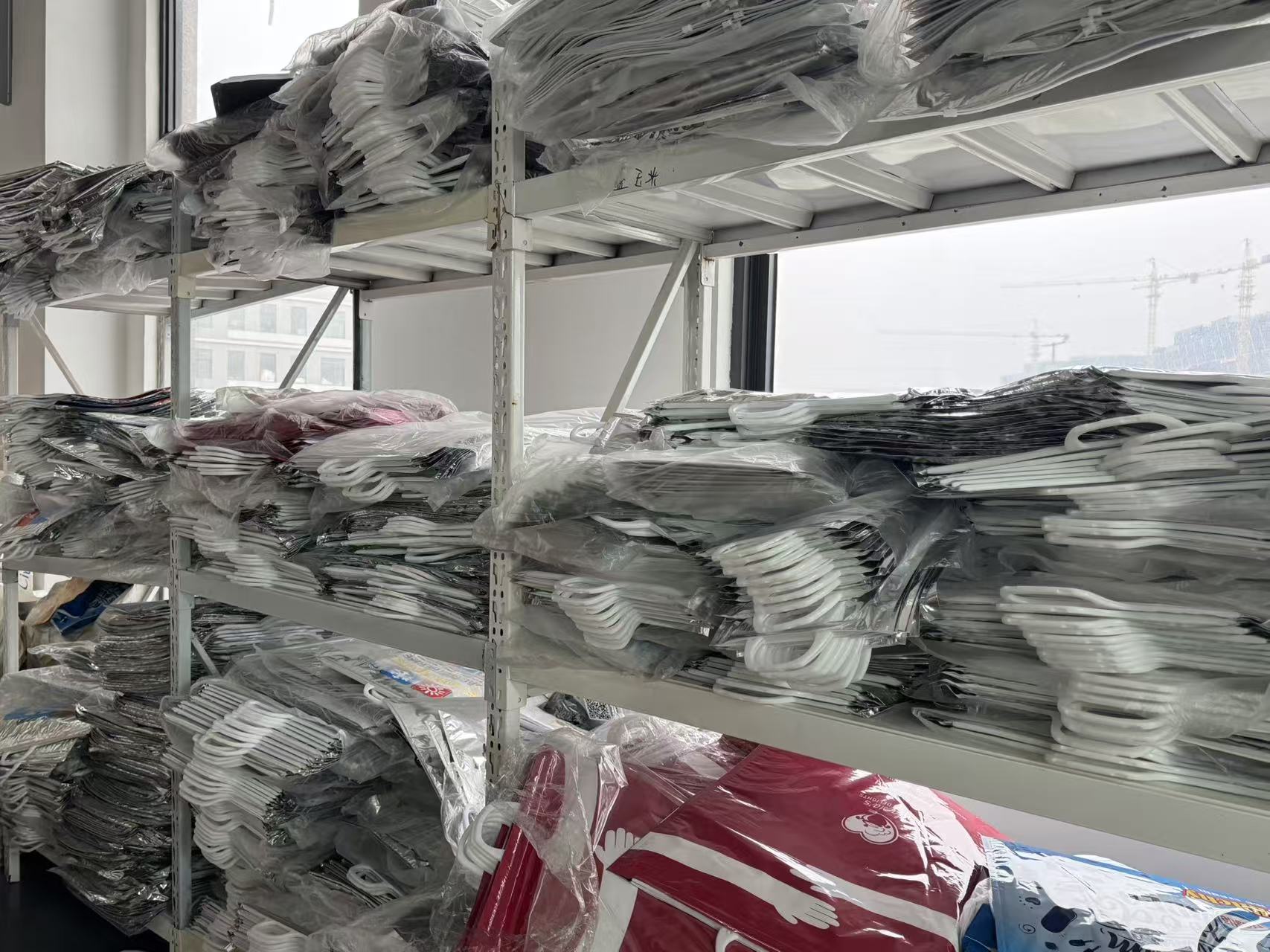
Insulated bag stock staged in Wenzhou, ready for repeat export programs.
Have Questions or Need More Details?
Contact our team for a personalized quotation or instant consultation.
Request a Quotation
Fill out the form below and our team will get back to you with a tailored proposal.
WhatsApp Direct Chat
Prefer to chat in real-time? Message us on WhatsApp for instant assistance & quick answers.
- Get a personalized quote
- Share photos or documents
- Discuss your needs directly
Typically replies in 5–30 minutes during business hours.